By Aurora Medical Spa
Preventative Botox may be worth it if you have faint lines that show only when you move your face, but it's a personal judgment call, not a sure thing. Botox relaxes the muscles that crease your skin, which may slow movement lines from becoming permanent. The evidence is limited, though. The most-cited proof is a study of a single pair of identical twins. Results also wear off in about 3 to 4 months, so prevention means repeat treatments and ongoing cost. You must be at least 18 and in good health. A licensed provider can tell you whether your lines make you a good candidate.
This guide walks through how to check your lines, what the research says, the honest pros and cons, and other ways to protect your skin.
What Counts as a "Faint" or Dynamic Line?
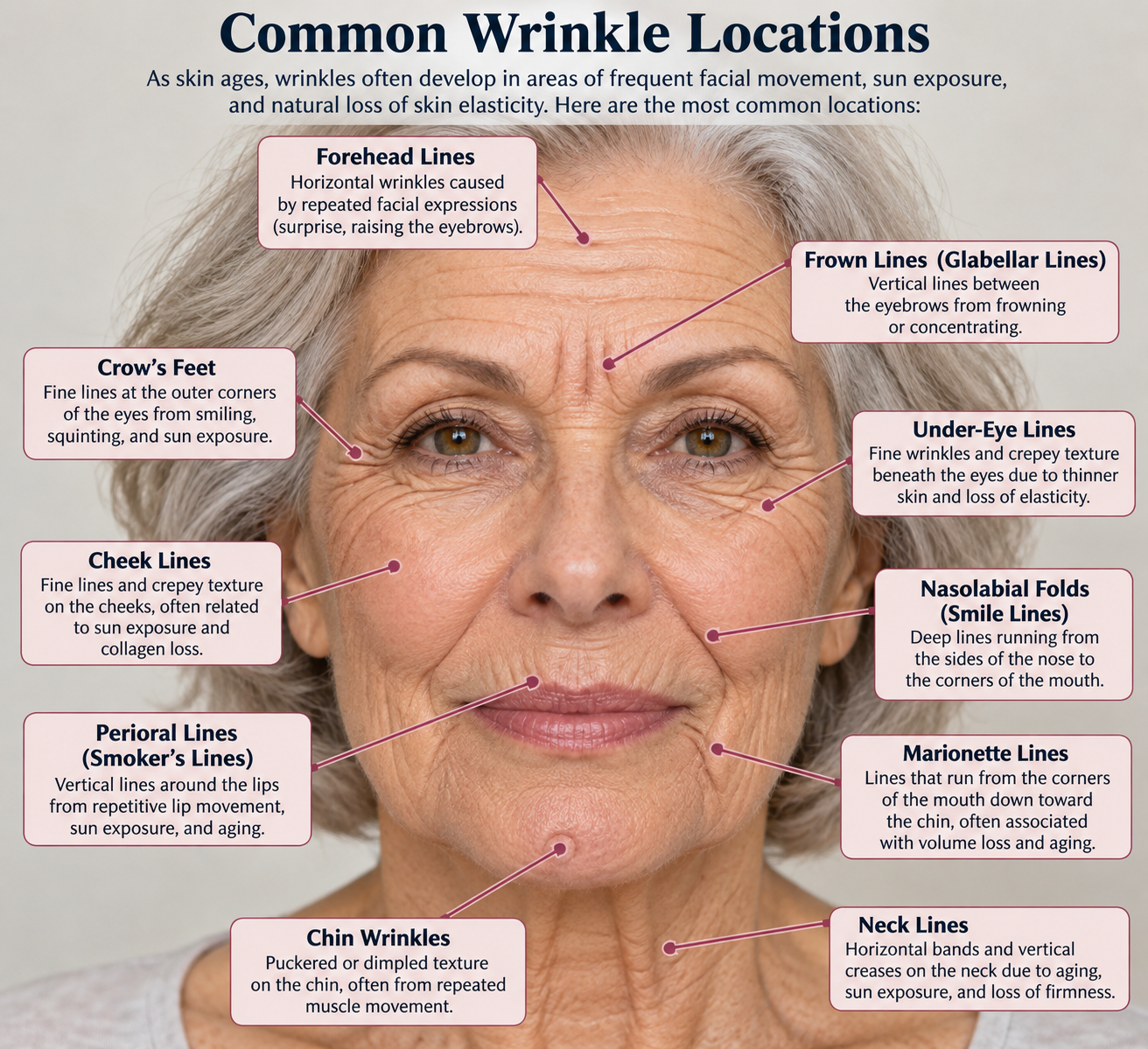
A faint or dynamic line is a wrinkle that appears only when your facial muscles move, such as when you raise your eyebrows, frown, or squint, and fades when your face relaxes. A static line stays visible even when your face is at rest. Dynamic lines are the type that preventative Botox is designed to target.
The most common dynamic lines show up in three places:
- Forehead lines: horizontal lines that appear when you raise your eyebrows.
- Frown lines (glabellar lines): the vertical "11s" between your eyebrows when you scowl or concentrate.
- Crow's feet: lines fanning out from the outer corners of your eyes when you smile or squint.
Try the mirror test. Stand in good, even light and relax your face completely. Look at your forehead, between your brows, and around your eyes. Then raise your eyebrows, frown, and smile. If a line shows up only during movement and disappears at rest, it's dynamic. If it stays when your face is relaxed, it has started to become static.
How Does Preventative Botox Work on Movement Lines?
Preventative Botox works by temporarily relaxing the specific muscles that create movement lines, so those muscles fold the skin less often and less forcefully. Botox is a neuromodulator, meaning a purified botulinum toxin that blocks nerve signals to a targeted muscle. Less repeated creasing may slow the point at which dynamic lines settle into permanent static lines.
Think of folding a piece of paper. Fold it once and the crease is faint. Fold it in the same spot thousands of times and the crease becomes permanent. Your skin behaves in a similar way. Each frown or eyebrow raise folds the skin along the same path. Over years, and combined with natural aging, those folds can become lines you see even at rest.
Preventative Botox aims to reduce that repeated folding. Botox is "preventative" because of when it's used, not because of a different product. It is the same treatment used on deeper lines, applied earlier.
What Does the Research Say About Preventative Botox?
The research on preventative Botox is promising but thin. The most-cited evidence is a 2006 report on one pair of identical twins. The twin treated regularly for 13 years showed no set-in forehead or frown lines, while her minimally treated sister did. Experts say there isn't much hard data beyond this kind of evidence.
In the twin report, published by Dr. William Binder in Archives of Facial Plastic Surgery, untreated areas of the face aged about the same in both sisters (PubMed). That suggests the difference was tied to the treated areas, not to overall lifestyle. Still, a study of two people can't prove cause and effect, and it can't predict how your skin will respond.
Doctors interviewed by Cleveland Clinic say there is "not much evidence" for preventative Botox. One plastic surgeon called the idea "a reasonable assumption, but we don't have hard data to support it." The same source notes that the effect goes away once treatments stop.
Younger adults are trying it anyway. Neuromodulators were the top minimally invasive cosmetic treatment in 2024, with 9,883,711 procedures, up 4% from 2023, according to the American Society of Plastic Surgeons 2024 Statistics Report. In 2023, the 20–29 and 30–39 age groups each grew more than 8%, though patients aged 40–54 still made up more than 56% of injections (ASPS).
Who Is a Good Candidate (and Who Should Wait)?
A good candidate for preventative Botox is a healthy adult, 18 or older, with lines that show when the face moves and fade at rest, who is comfortable with repeat treatments every few months. People with certain neuromuscular conditions, drooping eyelids, deep facial scars, or uneven facial features should not get injections.
You may be a good fit if:
- You're at least 18 and in good general health.
- Your lines appear with expression and fade when your face relaxes.
- Those lines bother you enough that you'd like to soften them now.
- You understand the evidence for prevention is limited.
- You're comfortable budgeting for treatments every 3 to 4 months.
You might wait if:
- You can barely see your lines and they don't bother you.
- You're not ready to commit to ongoing treatments.
- You'd rather start with sunscreen and skincare first.
Botox isn't for you if:
The American Academy of Ophthalmology says people should not get botulinum toxin injections if they have a neuromuscular disease (such as multiple sclerosis or myasthenia gravis), drooping eyelids (ptosis), deep facial scars, or uneven facial features. Share your full medical history and all medications and supplements with your provider.
If you think you fit, you can book a Botox consultation with Aurora Medical Spa to have a provider look at your lines in person.
Preventative Botox Pros vs. Cons
Preventative Botox offers a possible benefit, softer movement lines that may set in more slowly, in exchange for limited evidence, a temporary effect, and a recurring cost. The table below lays out both sides so you can weigh them against your own goals and budget.
| Pros | Cons | |
|---|---|---|
| Results | Softens faint lines that show with movement | Doesn't reliably treat lines caused by volume loss |
| Prevention | May slow dynamic lines from becoming static | Best-known evidence is one pair of identical twins (PubMed) |
| Duration | Effect lasts about 3–4 months per treatment (FDA) | Effect stops when treatments stop (Cleveland Clinic) |
| Commitment | Short appointments | Repeat visits needed to keep the effect |
| Side effects | Common effects are usually at the injection site | Pain, swelling, redness, or bruising can occur; effects show within the first week (FDA) |
| Cost | Ask for a personalized estimate at your consultation | Ongoing expense over years, not a one-time cost |
What Should You Expect From Treatment?
A preventative Botox appointment typically takes 15 to 30 minutes, and results build over about two weeks. Initial softening often appears within three to five days. Results from Botox Cosmetic last roughly 3 to 4 months, according to FDA prescribing information, so maintenance visits are part of the plan.
During the visit. Your provider looks at how your face moves, marks the treatment areas, and uses a very fine needle to place small injections into the target muscles. A topical numbing cream may be offered.
Right after. You may notice minor redness, swelling, or bruising at the injection points. Your provider may ask you to avoid exercise and sun exposure for a short time. Follow the exact aftercare instructions you're given.
Side effects to know. The FDA label notes that side effects appear within the first week after injection. Many are temporary, though some can last several months or longer. Injection-site pain, tenderness, swelling, redness, and bruising are possible (FDA). Tell your provider about any medications you take, since some can interact with Botox.
How often. Botox Cosmetic lasts about 3 to 4 months, so most preventative plans involve visits several times a year. For a deeper look at the basics, read Aurora's BOTOX 101 guide.
Other Ways to Prevent Wrinkles From Setting In
Daily sunscreen is one of the best-supported ways to slow visible skin aging. In a randomized trial of 903 adults under 55, people who applied sunscreen every day showed 24% less skin aging over 4.5 years than people who used it at their own discretion. Sunscreen and Botox address different causes of lines, so they can work together.
The sunscreen trial, led by Hughes and published in Annals of Internal Medicine, had participants apply SPF 15+ to the head, neck, arms, and hands each morning (PubMed). Sunscreen protects against sun-related aging, but it doesn't relax the muscles behind expression lines. Botox relaxes those muscles but doesn't protect against the sun.
Other everyday habits support healthy skin too:
- Reapply sunscreen after sweating, swimming, or long sun exposure.
- Wear sunglasses to cut down on squinting.
- Use a consistent, gentle skincare routine.
If you have lines that stay visible at rest or are caused by volume loss, other options may fit better. You can explore Aurora's full range of skin and injectable treatments with a provider.
So, Is It Worth It for You?
Preventative Botox is worth it for you if your movement lines bother you, you're healthy and 18 or older, and you're comfortable budgeting for treatments every 3 to 4 months, knowing the prevention evidence is limited. If your lines don't bother you yet, daily sunscreen and waiting are reasonable choices too.
There's no wrong answer. Some people prefer to soften faint lines early. Others would rather wait until lines start to show at rest. What matters is that you choose based on honest expectations, not pressure.
The best next step is a conversation with a licensed provider who can look at your lines, review your health history, and explain your options. Schedule a free Botox consultation at Aurora Medical Spa, or visit a nearby location such as Des Peres, Columbia, or Colorado Springs.
Frequently Asked Questions
At what age is preventative Botox usually considered?
Preventative Botox requires you to be at least 18 and in good health, according to the American Academy of Ophthalmology. Beyond that, there's no set starting age. Whether it makes sense depends on whether you have visible movement lines that bother you, not on a birthday. A provider can assess your lines in person.
Will my wrinkles get worse if I stop preventative Botox?
No, stopping preventative Botox doesn't make wrinkles worse. Muscle movement gradually returns to normal, and lines continue forming at their natural pace. Cleveland Clinic notes that the effect goes away once treatments stop. You won't lose ground; you simply stop getting the added muscle-relaxing effect.
How many units does preventative Botox typically use?
There's no standard unit count for preventative Botox. Your provider decides the dose based on your muscle strength, the areas being treated, and how much movement you want to keep. Preventative plans often take a more conservative approach than treating deeper lines. Ask for a specific dose and cost estimate at your consultation.
Can preventative Botox make my face look frozen?
Preventative Botox doesn't have to look frozen. The goal is usually to soften movement, not stop it completely. How natural your results look depends on the dose and where it's placed. Tell your provider how much expression you want to keep so they can plan your treatment around that goal.
Is sunscreen enough to prevent wrinkles without Botox?
Sunscreen is a strong first step but works differently from Botox. In one randomized trial, daily sunscreen users showed 24% less skin aging over 4.5 years (PubMed). Sunscreen protects against sun damage, while Botox relaxes the muscles behind expression lines. Many people use both.